 English












Full Ball Bearings: Cage-Free 68/69 Series Explained
Sep 23, 2026 0 Dreampower
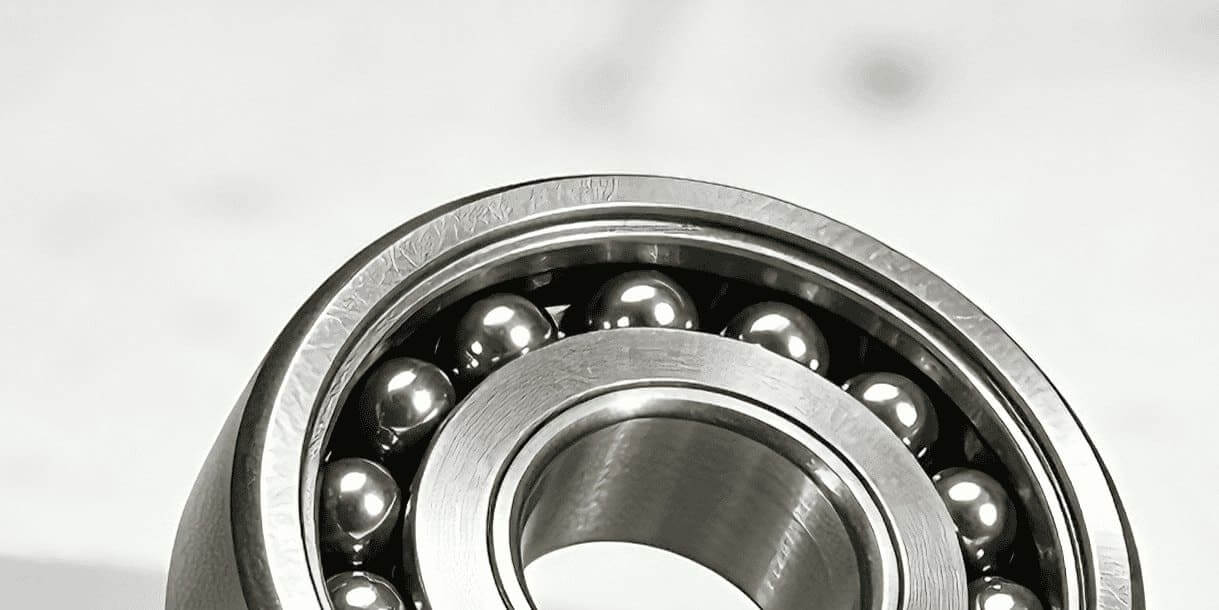
Key Takeaways:
* Load Capacity: Full ball designs increase ball count by 30%–50%, boosting radial load capacity by 35%–45%.
* Best For: Low-speed oscillation, high impact, and space-constrained applications like MTB suspension pivots.
* Technical Specs: Features deepened raceways, C2 small clearance, and high-performance VRS/LLU seals.
* Speed Limit: Not recommended for continuous high-speed rotation (typically <1000 RPM).
I. The "Invisible Framework" — Why Remove the Cage?
In standard deep groove ball bearings, the cage separates steel balls to prevent friction. However, in heavy-duty thin-section bearings (like the 68/69 series), the cage occupies valuable internal space.
By removing the cage, we create a Full Ball (MAX) Bearing. Think of it like a bus: removing the seats (the cage) allows more passengers (steel balls) to stand inside, significantly increasing the "carrying capacity."
II. Why 68/69 Series "Full Ball" is the Choice for Engineers?
The 68 and 69 series are ultra-thin walled bearings designed for compact spaces. When standard caged versions aren't enough, the full ball design provides a critical performance upgrade:
▪ Massive Static Load Rating (C0): With 30%–50% more steel balls, the load is distributed across more contact points, reducing the pressure on each individual ball.
▪ Impact Resistance: In applications like mountain bike pivots, the cage is often the "weak link" that fractures under sudden shocks. A cage-free design eliminates this failure point entirely.
▪ Enhanced Stability: These bearings typically feature deepened raceways and C2 small clearance to reduce internal shaking and improve axial stability.
| Comparison Metric | Standard Caged Bearing | Full Ball (MAX) Bearing |
| Radial Load Capacity | Baseline | +35% to 45% Higher |
| Impact Resistance | Moderate (Cage may break) | High (No cage to fail) |
| Speed Limit | High (e.g., 20,000+ RPM) | Low (Recommended <1000 RPM) |
| Typical Clearance | CN (Normal) | C2 (Tight/Stable) |
III. Typical Applications: From Bicycles to Industry
The 68/69 and thickened 638 series full ball bearings are ideal for oscillating conditions where high speed isn't required, but durability is non-negotiable.
▪ Cycling: Suspension pivots and rear swing arms (6801-VRS, 6902-LLU).
▪ Construction: Small excavator connecting rods and skid steer loader swing shafts.
▪ Industrial: Flip tooling, connecting rod pivots, and agricultural harvester pivots.
IV. Selection & Installation Pro-Tips
① Check Dimensions: Full ball bearings share the exact same external dimensions as standard models, making them a direct "drop-in" upgrade.
② Seal Choice: For dusty or muddy environments (like MTB trails), specify VRS or LLU double-lip labyrinth seals for maximum protection.
③ Lubrication: We recommend a slightly higher grease fill (70%–80%) to ensure a consistent oil film between the contacting balls.
④ Precision Press-Fit: Due to the tighter C2 clearance, use a professional press-fitting tool to avoid misalignment or jamming.
V. Quick FAQ
Q: Are they more expensive?
A: Usually 10%–25% more due to the labor-intensive manual assembly of the extra balls. However, this is highly cost-effective for a 40% gain in load capacity.
Q: Can I use them in an electric motor?
A: No. The friction between steel balls without a cage generates heat at high speeds. They are strictly for low-speed or oscillating applications.
Need a Technical Drawing or Bulk Quote?
If your equipment needs to "undertake heavier work" in a limited space, Welink Bearing provides premium 68/69/638 VRS-MAX series with optimized internal geometry.
[Contact Our Engineering Team for a Datasheet]