
How a Food Processing Equipment Manufacturer Reduced Downtime with 440C Stainless Steel Bearings?
Introduction
In food processing facilities, keeping equipment running is just as critical as keeping production efficient. A single bearing failure can stop an entire line, delaying shipments, driving up maintenance costs, and creating downtime that ripples through the rest of the plant. Bearings in this environment face conditions that ordinary industrial machinery rarely sees: moisture, frequent washdowns, cleaning chemicals, and constant temperature swings between production and sanitation cycles.
A food processing equipment manufacturer approached Welink Bearing after facing repeated bearing replacements on several of its conveyor and packaging systems. The bearings were correctly sized and properly installed, yet a number of units still needed servicing far sooner than expected. Instead of simply swapping in identical replacement parts, the manufacturer's engineering team decided to dig into what was actually happening on the plant floor.
What they found was that the problem had little to do with bearing size or load capacity. It came down to material selection.
Customer Background
The customer designs and manufactures food processing equipment for meat processing plants, vegetable washing lines, bakery production, and food packaging facilities. Its machines are exported to Southeast Asia, South America, and the Middle East, where production lines typically run long shifts with little tolerance for unplanned downtime.
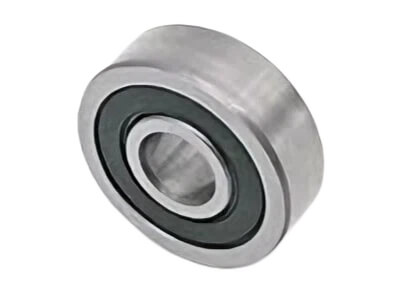
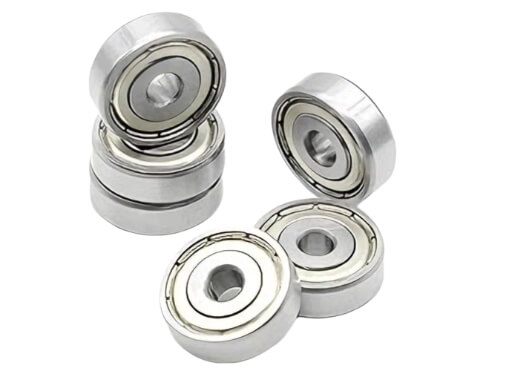
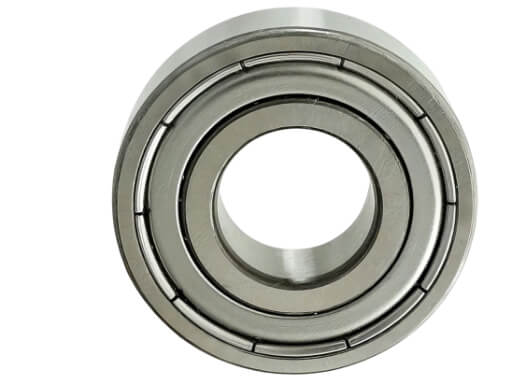
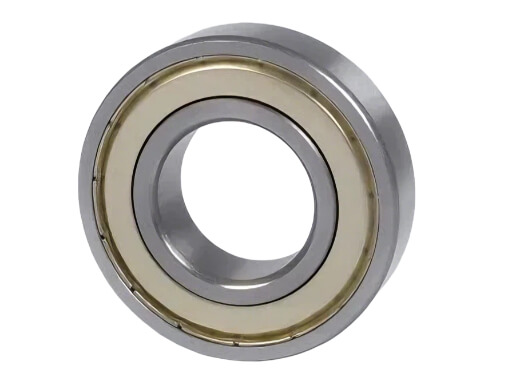
Most of the rotating components in this equipment rely on standard deep groove ball bearings, primarily from the 60, 62, and 63 dimension series (for example 6006, 6200, 6300, 6001, 6201, 6301, 6002, 6202, 6302, 6003, 6203, 6303, 6004, 6204, and 6304).
Bearings account for only a small share of total equipment cost, but their reliability has an outsized effect on production efficiency. When one bearing fails unexpectedly, the conveyor stops, the line has to be shut down, and maintenance staff must replace the damaged part before production can resume, a chain reaction the manufacturer wanted to break without redesigning the equipment itself.
The Challenge
The manufacturer's maintenance team began hearing the same complaints from multiple customers. The most common symptoms were:
● Bearing noise increasing after several months in service
● Rust forming around the bearing seals
● Higher running resistance found during inspection
● Bearings that were difficult to rotate by hand after removal
● Unexpected shutdowns caused by seized bearings
At first, engineers suspected improper installation or insufficient lubrication. But the returned bearings showed the same damage pattern regardless of where they were installed on the machine, and most failures showed up only after equipment had gone through hundreds of cleaning cycles. That pattern pointed to the working environment, not the bearing dimensions as the real driver of service life.
Understanding the Operating Environment
Food processing equipment runs in conditions that are considerably harsher than they appear from the outside. At the end of each shift, machines are cleaned to remove food residue and meet hygiene regulations, and depending on the application, that cleaning process can involve:
● High-pressure water
● Warm water
● Mild alkaline detergents
● Approved disinfectants
● Steam cleaning in certain areas
On top of the washdown itself, bearings cycle through repeated temperature swings as equipment shifts between production and cleaning. Sealed bearings help keep contaminants out, but no seal can fully block moisture from working its way into internal components over years of continuous service. Once moisture gets in, corrosion becomes one of the leading causes of premature bearing failure.
Investigation and Root Cause Analysis
Welink's engineering team collected a sample of failed bearings from customer sites and inspected them in detail. Three findings kept showing up.
Surface Corrosion
Visible rust appeared on the outer rings, raceways, and occasionally on the balls themselves. Even minor corrosion created tiny surface defects that disrupted smooth rolling motion, and as the bearing kept running, those defects generated additional vibration and noise.
Grease Contamination
Moisture that entered the bearing gradually broke down the grease. Rather than maintaining a stable lubricating film, the contaminated grease became less effective at separating the rolling elements from the raceway, and friction climbed as a result.
Premature Wear
Raceways showed early fatigue rather than overload damage. Since the bearings were operating comfortably within their rated load capacity, this pointed to corrosion, not excessive load as the factor accelerating wear. Taken together, the findings confirmed that the original bearing material wasn't well matched to a washdown environment.
Why Standard Chrome Steel Fell Short?
The original bearings were made from GCr15 bearing steel, the industry standard for most deep groove ball bearings. GCr15 offers excellent hardness, fatigue resistance, and load-carrying capacity, and in clean, dry conditions it delivers a long service life.
Its weak point is corrosion resistance. If moisture stays inside the bearing after repeated cleaning cycles, corrosion can start forming on exposed steel surfaces, and once it reaches the raceway, bearing performance deteriorates quickly. None of this makes GCr15 a poor material, it simply means it's better suited to applications where corrosion isn't a major factor.
Why 440C Stainless Steel Was the Better Fit?
During the evaluation, the engineering team weighed several material options. Some team members initially proposed 304 stainless steel, since it's widely associated with food-grade equipment. But 304 isn't suitable for bearing raceways, its hardness is too low to withstand continuous rolling contact, which leads to rapid wear.
The manufacturer settled on 440C martensitic stainless steel instead. 440C is a common choice for precision bearings because it strikes a practical balance between corrosion resistance and mechanical strength. Compared with standard chrome steel, it holds up significantly better against moisture while still providing the hardness rolling bearings need, making it a much better match for equipment exposed to frequent washdowns.
Additional Improvements
Changing the bearing material alone wasn't considered enough on its own. The manufacturer also reviewed other factors that influence bearing performance in this environment.
Double Rubber Seals (2RS)
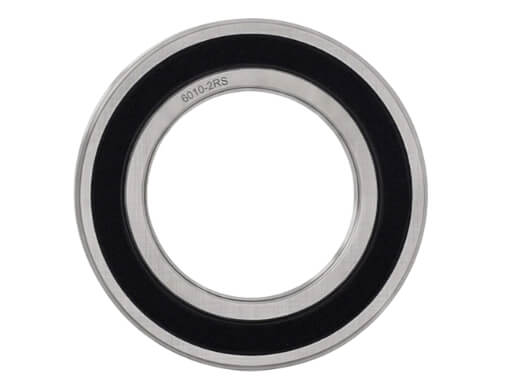
Open bearings and metal-shielded bearings were replaced with 2RS sealed bearings wherever operating speeds allowed, giving better protection against water and cleaning solution entering the bearing.
Lubrication Review
The grease specification was reviewed for compatibility with the actual operating temperature and cleaning environment, and lubrication was matched to each application rather than applied as a single general-purpose grease across all equipment.
Maintenance Procedures
Maintenance staff were advised to avoid pointing high-pressure water jets directly at rotating bearings during routine cleaning. Sealed bearings offer protection on their own, but reducing direct water impact helps extend seal life further.
Testing and Field Performance
Before rolling out the new specification across the full product range, several production machines were fitted with 440C stainless steel bearings for field evaluation under normal production schedules and routine cleaning procedures. Engineers tracked:
● Bearing noise
● Running temperature
● Rotational smoothness
● Seal condition
● Visual signs of corrosion
Compared with the original configuration, the stainless steel bearings stayed visibly cleaner after repeated washdowns, and follow-up inspections found noticeably less corrosion around the bearing surfaces. All bearings still need proper maintenance, but the revised specification proved to be the better fit for this operating environment.
Results
After rolling out the new bearing specification, the manufacturer reported several improvements:
● Fewer bearing replacements during scheduled maintenance
● Reduced corrosion on bearing surfaces
● More consistent running performance across repeated cleaning cycles
● Lower maintenance workload from unexpected bearing failures
● Improved equipment uptime for end users
Bearing service life still depends on many variables, installation quality, operating load, lubrication, and maintenance practices among them, but the material upgrade meaningfully improved resistance to one of the leading causes of failure in this application.
Lessons Learned
This project is a reminder that selecting the right bearing takes more than matching dimensions. Engineers evaluating bearings for similar equipment should also weigh:
● Operating environment
● Exposure to moisture
● Cleaning frequency
● Bearing material
● Seal type
● Lubrication
For food processing equipment, corrosion resistance can matter just as much as load capacity. That said, stainless steel isn't automatically the right call for every application, standard GCr15 bearings still perform very well in dry industrial environments. The real goal is matching the material to the operating conditions, not defaulting to the material that sounds the most protective.
Frequently Asked Questions
① What is the best bearing material for food processing equipment?
For equipment exposed to frequent washdowns, chemical cleaning, or high humidity, 440C martensitic stainless steel is generally a better fit than standard GCr15 chrome steel because it resists corrosion while still holding the hardness rolling bearings need. In dry, low-corrosion environments, GCr15 remains a cost-effective and reliable option.
② Is 304 stainless steel suitable for bearings?
Not for raceways. 304 stainless steel is corrosion-resistant, but it's an austenitic grade that's too soft to withstand sustained rolling contact, so it wears quickly under load. Bearing raceways typically use martensitic grades such as 440C, which can be hardened for rolling contact while still resisting moisture.
③ How often should washdown-environment bearings be inspected?
Inspection frequency depends on cleaning intensity and duty cycle, but equipment that undergoes daily washdowns benefits from checking bearing noise, seal condition, and visible corrosion at routine maintenance intervals rather than waiting for a failure to prompt inspection.
④ Do sealed bearings fully prevent moisture from reaching the raceway?
No. Seals such as 2RS rubber seals significantly reduce moisture ingress, but no seal design fully blocks it over years of repeated washdowns. Material selection and maintenance practices remain important even with sealed bearings.
Conclusion
By tracing the real cause of premature bearing failures, the food processing equipment manufacturer identified corrosion, not load capacity as the primary issue. Switching from standard GCr15 bearings to 440C stainless steel bearings, paired with improved sealing and maintenance practices, helped cut unexpected downtime and improve equipment reliability.
The case underscores a broader principle in bearing selection: the right bearing isn't simply the one with the correct dimensions, it's the one built for the environment it will actually operate in. For equipment manufacturers serving the food industry, evaluating bearing material at the design stage can reduce maintenance costs and strengthen long-term customer satisfaction.
About Welink Bearing
Welink Bearing specializes in deep groove ball bearings for electric motors, food processing equipment, pumps, ventilation systems, agricultural machinery, power tools, and other industrial applications. We offer standard chrome steel bearings, stainless steel bearings, miniature bearings, and customized solutions based on operating conditions, clearance requirements, lubrication, and vibration performance.
Whether you're developing new equipment or improving an existing design, our engineering team can help you select the bearing solution best suited to your application. Browse our full range of deep groove ball bearings or contact us to discuss your requirements.
Contact Welink Bearing
Address: No. 189, Xiahe Road, Siming District, Xiamen, China
Mobile / WeChat / WhatsApp: +86 18030202929
Email: sales1@welinkbearing.com
Made-in-China Website: https://welinkbearing.en.made-in-china.com/
Leave A Message
Scan to Wechat/Whatsapp :