
Case Study: How a 3D Printer Manufacturer Improved Print Accuracy Through Better Bearing Selection?
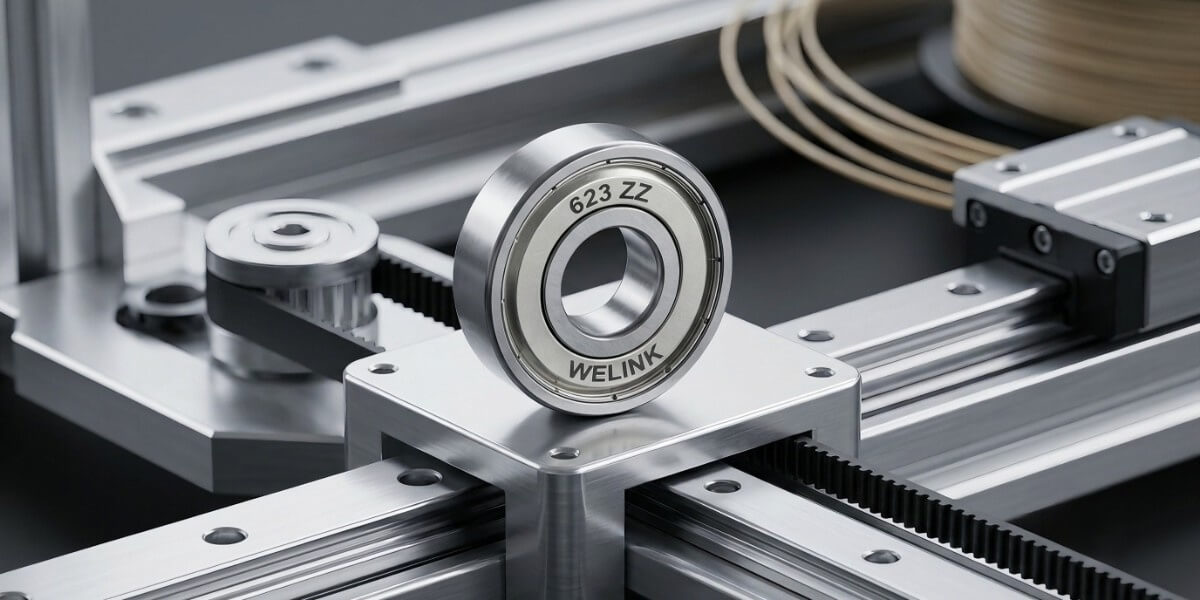
As 3D printing technology continues to advance, users expect faster printing speeds without sacrificing dimensional accuracy or surface quality. Whether producing complex prototypes, functional components, or customized products, modern 3D printers rely heavily on smooth, precise mechanical movement to achieve consistent results.
While engineers naturally focus on controllers, stepper motors, belts, and guide rails, miniature bearings are often overlooked. However, even the slightest variation in bearing performance can destabilize rotating components, leading to micro-vibrations, inconsistent motion, and ultimately, reduced print quality.
Recently, a 3D printer manufacturer approached Welink Bearing after receiving feedback that some of their machines produced inconsistent surface finishes during long print jobs. While the printers met all initial design specifications, slight quality deviations were observed between production batches. Rather than undertaking a costly machine redesign, their engineering team partnered with us to review every rotating component. Ultimately, optimizing the bearing configuration proved to be the game-changer.
Customer Background
The customer is a respected manufacturer of desktop and light-industrial FDM (Fused Deposition Modeling) 3D printers, catering to educational institutions, design studios, and small-scale manufacturing hubs.
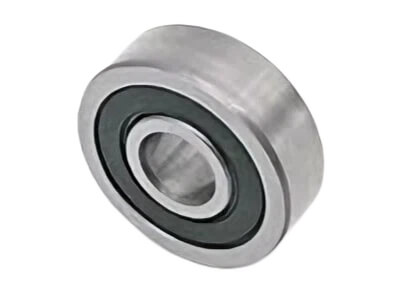
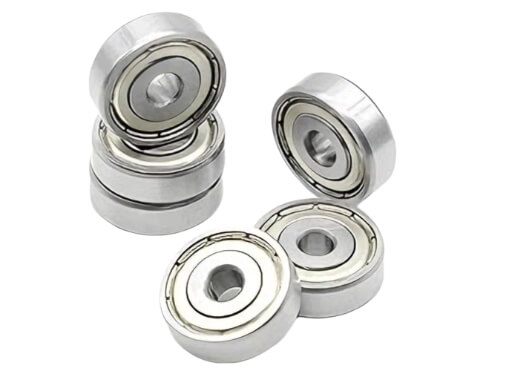
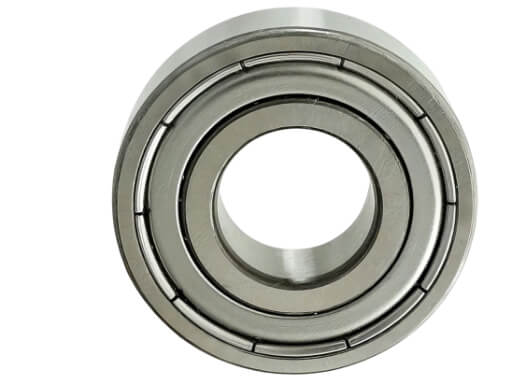
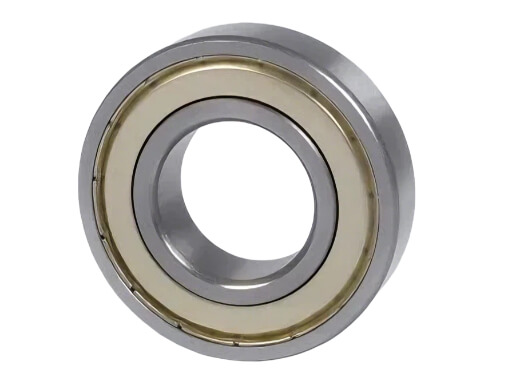
Their equipment is engineered to operate continuously for days, demanding flawless positioning accuracy throughout the entire print cycle. Several miniature deep groove ball bearings are integrated into different critical assemblies:
| Bearing Model | Typical Application in 3D Printers |
| 623ZZ | Filament feeder rollers |
| 624ZZ | Belt idler pulleys |
| 625ZZ | Motion transmission assemblies |
| 688ZZ | High-speed rotating components |
Although these bearings are small in size, they act as the foundation for the smooth operation of all moving parts within the system.
The Challenge: Inconsistent Print Quality and Vibration
During routine quality inspections, the customer's engineers noticed that print quality wasn't entirely uniform across different production batches. The most common pain points included:
• Slight layer inconsistencies on vertical surfaces (Z-banding or ringing).
• Minor mechanical vibrations during rapid X/Y axis movements.
• Small variations in filament extrusion consistency.
• Increased mechanical noise after extended hours of operation.
While these issues were relatively minor and didn't stop the printers from functioning, users relying on these machines for precision engineering prototypes expected absolute perfection. The manufacturer needed a way to enhance print consistency without driving up machine complexity or manufacturing costs.
Understanding Motion Requirements in 3D Printers
The moving assemblies are lightweight, but they demand highly repeatable motion. Because bearings support nearly all rotating components within this system, their running quality—specifically rotational smoothness and friction stability—directly dictates mechanical stability.
Investigation and Root Cause Analysis
After ruling out belt tension, stepper motor calibration, and frame rigidity, the manufacturer's engineers, working alongside Welink Bearing specialists, focused on the motion system's bearings.
Although the original bearings met standard dimensional specifications, our joint analysis identified several hidden factors causing the micro-irregularities:
• Variation in Rotational Smoothness: Some bearings required slightly more starting torque than others. This minor difference caused micro-stutters in pulley rotation during rapid acceleration and deceleration.
• Vibration Inconsistency: Diagnostics revealed that vibration characteristics fluctuated between different bearing batches. While acceptable for general industrial use, these variations are detrimental to precision 3D printing.
• Uneven Lubrication Distribution: Inspection revealed inconsistent grease fill rates in the original bearings. Excessive grease increased rotational resistance, while insufficient grease risked long-term wear and noise.
The Welink Bearing Solution
Instead of modifying the printer's core architecture, Welink Bearing provided a tailored, high-consistency bearing solution to stabilize the entire motion system.
① Upgraded to Precision-Grade Bearings: We replaced standard components with higher precision-grade bearings. The tighter dimensional tolerances drastically reduced rotational runout, ensuring fluid movement across all axes.
② Strict Vibration Standards: Welink Bearing implemented stricter vibration and noise level (Z-class/V-class) sorting for the customer's orders. By tightening the acceptable variance between batches, we ensured every printer behaved predictably.
③ Optimized Custom Lubrication: We overhauled the grease filling process, selecting a low-torque, high-performance lubricant and controlling the fill volume with high precision. This achieved the perfect balance: stable, long-lasting lubrication with minimal rotational resistance.
④ Enhanced Quality Inspection (QA): Before shipping, all bearings for this project underwent supplementary checks, including rotational smoothness testing and acoustic evaluation, filtering out any outliers before they reached the customer's assembly line.
Testing and Results
Several printers equipped with the new Welink Bearing specifications were put through rigorous, continuous operation testing. The results were immediate and measurable:
⁍ Silky-Smooth Motion: The moving assemblies operated flawlessly, even during high-speed, aggressive directional changes.
⁍ Flawless Print Consistency: Layer-to-layer alignment improved significantly, eliminating the surface artifacts that previously plagued long print jobs.
⁍ Noticeable Noise Reduction: The mechanical noise associated with high-speed travel was dramatically reduced, creating a quieter operating environment for end-users.
⁍ Streamlined Production: With bearing quality now strictly controlled batch-to-batch, the manufacturer experienced far fewer rejections during their own final QA inspections.
Lessons Learned
It is a common misconception that 3D print quality relies solely on slicer software, electronics, or guide rails. In reality, supporting mechanical components play an equally critical role.
When sourcing bearings for precision equipment, engineers must look beyond simple dimensions. Evaluating rotational smoothness, manufacturing consistency, precise lubrication, and vibration characteristics is essential. Treating bearings as a commodity rather than a precision component can bottleneck the performance of an otherwise excellently designed machine.
Conclusion
By partnering with Welink Bearing to optimize bearing selection, the manufacturer achieved superior motion control, highly consistent print quality, and a quieter machine—all without changing a single line of code or altering the machine's structural design.
This case proves that miniature bearings are not just hardware; they are the heart of a machine's precision system. For OEM manufacturers developing high-accuracy motion equipment, expert bearing selection is the most cost-effective strategy to elevate product performance.
About Welink Bearing
Welink Bearing specializes in manufacturing high-quality miniature and deep groove ball bearings for 3D printers, robotics, medical devices, drones, and automation equipment. We provide customizable bearing solutions tailored to your specific precision grades, vibration controls, and lubrication needs.
Whether you are designing a new prototype or troubleshooting an existing motion system, our engineering team is ready to help you find the perfect fit.
Contact Welink Bearing
Address: No. 189, Xiahe Road, Siming District, Xiamen, China
Mobile / WeChat / WhatsApp: +86 18030202929
Email: sales1@welinkbearing.com
Leave A Message
Scan to Wechat/Whatsapp :