
How a Food Processing Equipment Manufacturer Reduced Downtime with Stainless Steel Bearings
Introduction
In food processing facilities, equipment reliability matters almost as much as throughput. A single seized bearing can bring an entire packaging or conveyor line to a stop, and once that happens, the cost is rarely limited to the part itself. There's the missed shift output, the rush replacement, and the knock-on delay to shipping schedules.
Bearings in this kind of equipment don't get an easy life. Between washdowns, cleaning chemicals, and constant temperature swings, they're working in conditions that most industrial bearings never have to face.
A food processing equipment manufacturer came to Welink Bearing after noticing a pattern: several of its conveyor and packaging systems kept needing bearing replacements far sooner than the rated service life suggested. The bearings weren't undersized, and installation had already been double-checked. So instead of swapping in more of the same part, the customer's engineering team asked us to help dig into what was actually happening during operation.
What we found was that the failures weren't really about size or load rating at all, they came down to material choice.
Customer Background
The customer designs and manufactures food processing equipment used across meat processing plants, vegetable washing lines, bakery production, and packaging facilities. Their machines ship to Southeast Asia, South America, and the Middle East, where lines often run long shifts with very little scheduled downtime, which makes an unplanned stop even more costly.
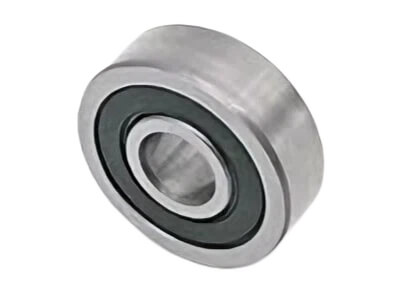
Most of the rotating components in their equipment rely on standard deep groove ball bearings, including the following models:
| Bearing Model | Typical Application | Original Material |
| 6001-2RS | Conveyor guide rollers | GCr15 chrome steel |
| 6002-2RS | Small drive assemblies | GCr15 chrome steel |
| 6201-2RS | Packaging equipment | GCr15 chrome steel |
| 6202-2RS | Conveyor shafts | GCr15 chrome steel |
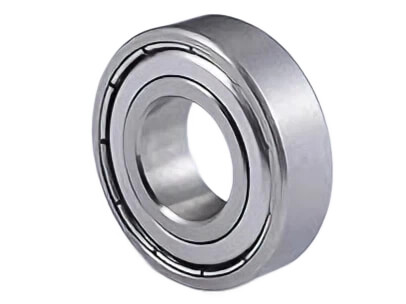
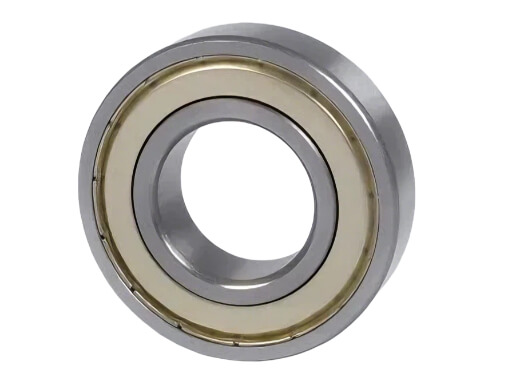
Bearings are a small line item relative to total equipment cost, but their reliability has an outsized effect on uptime. Some of the affected units, such as 6202 deep groove ball bearings, were running on standard chrome steel, a perfectly sound choice for dry industrial use, but not necessarily for a washdown environment. When one of these fails mid-shift, the conveyor stops, operators shut the line down, and maintenance has to pull and replace the part before production can resume.
The manufacturer's goal wasn't to redesign the equipment, it was to find a bearing specification that would hold up better under repeated cleaning cycles without touching the rest of the machine.
The Challenge
Over a few months, the customer's maintenance team started seeing the same complaints show up across different production sites. The most common symptoms were:
• Bearing noise increasing after several months in service
• Rust forming around the seals
• Noticeably higher running resistance during inspection
• Bearings that were stiff or hard to turn by hand after removal
• Unplanned shutdowns caused by seized bearings
At first, the engineers assumed it was an installation or lubrication issue, that's usually the first suspect. But the returned bearings told a more consistent story: similar corrosion and wear patterns showed up regardless of where on the machine the bearing was installed, and most failures traced back to units that had been through hundreds of cleaning cycles.
That pattern pointed away from installation error and toward the operating environment itself.
Understanding the Operating Environment
Food processing equipment operates in conditions that are harsher than they might look from the outside. At the end of each shift, machines go through a cleaning cycle to meet hygiene requirements, which can involve any combination of:
• High-pressure water
• Warm water rinses
• Mild alkaline detergents
• Approved disinfectants
• Steam cleaning in certain zones
On top of the chemical exposure, bearings also cycle through repeated temperature swings as the equipment alternates between production and washdown. Sealed bearings help keep contaminants out, but no seal is airtight forever, over months and years of continuous washdown service, some moisture eventually finds its way in. Once that happens, corrosion becomes one of the leading causes of early failure.
Investigation and Root Cause Analysis
Welink's engineering team pulled a sample of failed bearings from customer sites for a closer inspection. Three findings kept coming up.
Surface Corrosion
Visible rust showed up on outer rings, raceways, and in some cases the balls themselves. Even minor corrosion created tiny surface pits that interrupted smooth rolling contact and as the bearing kept running, those pits generated more vibration and noise over time.
Grease Contamination
Moisture that made it past the seal gradually broke down the grease's protective properties. Instead of maintaining a stable lubricating film, the contaminated grease lost its ability to separate the rolling elements from the raceway, and friction climbed as a result.
Premature Wear (Not Overload)
The raceways showed early fatigue rather than damage from overload. Load calculations confirmed the bearings were operating comfortably within their rated capacity, which ruled out sizing as the culprit and pointed squarely at corrosion as the real driver of wear.
Put together, the investigation confirmed a fairly clear conclusion: the original bearing material simply wasn't matched to a washdown environment.
Why Standard Chrome Steel (GCr15) Wasn't the Right Fit Here?
The original bearings were made from GCr15, the industry-standard bearing steel used in the large majority of deep groove ball bearings worldwide. GCr15 offers excellent hardness, fatigue resistance, and load capacity, and in clean, dry industrial settings it performs extremely well over a long service life.
Its weak point is corrosion resistance. If moisture is left behind inside the bearing after repeated cleaning, corrosion can start forming on exposed steel surfaces, and once the raceway is damaged, performance drops off quickly.
None of this makes GCr15 a bad material. It just means it's the wrong tool for a washdown-heavy application, which is a distinction that's easy to miss until you're staring at a pile of rusted bearings on a workbench.
Why 440C Stainless Steel Was Selected?
During the material review, a few options came up. Some team members initially floated 304 stainless steel, mostly because it's the grade people associate with food-contact equipment. It doesn't work for bearing raceways, though 304 is an austenitic stainless steel that can't be hardened through heat treatment, so it wears down quickly under continuous rolling contact.
Instead, the manufacturer moved to bearings made from 440C martensitic stainless steel, which is widely used in precision and food-industry bearings for exactly this reason: it can be hardened to a level suitable for rolling contact while still offering meaningfully better corrosion resistance than chrome steel. For an application built around frequent washdowns, that combination made it the more practical long-term choice.
Additional Improvements
Switching the raceway material wasn't treated as a complete fix on its own, the team also reviewed a few related factors that affect real-world bearing life.
Double Rubber Seals (2RS)
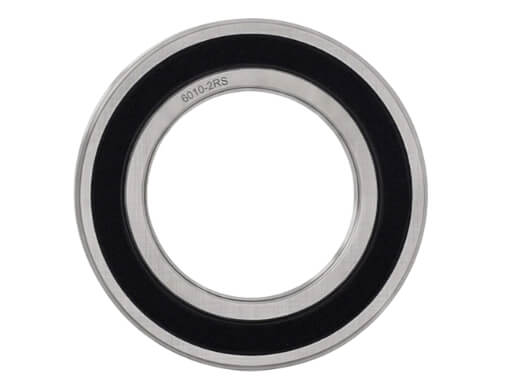
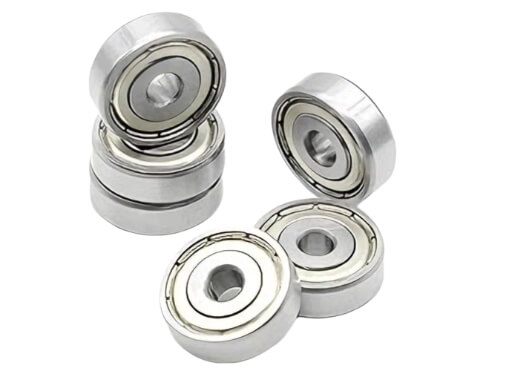
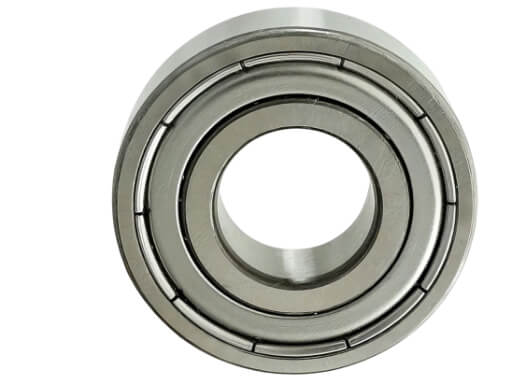
Open and metal-shielded bearings were swapped for 2RS double-sealed bearings wherever operating speeds allowed, similar to the 6001–6304 series deep groove ball bearings Welink supplies for washdown-duty equipment. The rubber lip seals gave noticeably better protection against water and cleaning solution ingress than the original shields.
Lubrication Review
Grease selection was reviewed against actual operating temperature and cleaning exposure rather than defaulting to a single general-purpose grease across every application.
Maintenance Procedure Adjustments
Maintenance staff were asked to avoid aiming high-pressure jets directly at rotating bearings during routine cleaning. Sealed bearings help, but reducing direct water impact still adds meaningful seal life on top of that.
Testing and Field Performance
Before rolling the new specification out across the full product range, the customer fitted 440C stainless steel bearings to a batch of production machines for a four-month field trial across 18 conveyor and packaging lines, run under normal production schedules and standard cleaning routines.
Throughout the trial, engineers tracked bearing noise, running temperature, rotational smoothness, seal condition, and visible corrosion at each scheduled inspection.
"Once we switched over, the difference showed up fast. The bearings coming off the washdown lines just looked cleaner, and we weren't chasing the same rust-related noise complaints every month," said the customer's maintenance manager.
Compared with the original configuration, the stainless steel bearings held up visibly better after repeated washdowns, with less corrosion found at inspection and more consistent running behavior over the trial period.
Results
After rolling out the revised specification, the manufacturer tracked the following changes over the following two production quarters:
| Metric | Before (GCr15) | After (440C Stainless) |
| Avg. bearing service life | ~4 months | ~11 months |
| Unscheduled line stops / quarter | 6–8 | 2–3 |
| Visible corrosion after 3 months | Common | Rare |
| Bearing-related maintenance workload | Baseline | Down ~35% |
Bearing service life still depends on installation quality, load, lubrication, and maintenance discipline, the material change doesn't remove those variables. What it did was close off one of the main failure paths this customer was dealing with, which is reflected in the numbers above.
Lessons Learned
This project was a reminder that picking the right bearing is about more than matching dimensions on a datasheet. For equipment that lives in a washdown environment, it's worth evaluating:
• Operating environment and moisture exposure
• Cleaning frequency and chemical type
• Bearing material
• Seal type
• Lubrication compatibility
Corrosion resistance can matter just as much as load capacity in food processing settings, but that doesn't mean stainless is always the better choice everywhere. GCr15 still performs excellently in dry industrial environments, and switching to stainless across the board would add cost without adding value in those cases. The goal is matching the material to the environment, not defaulting to the more expensive option by default.
Frequently Asked Questions
① Is 440C stainless steel bearing corrosion-proof?
No bearing material is fully corrosion-proof. 440C offers significantly better resistance to moisture and washdown chemicals than standard GCr15 chrome steel, but proper sealing, lubrication, and maintenance still matter.
② Why not just use 304 stainless steel bearings for food equipment?
304 stainless steel can't be hardened through heat treatment, so it wears too quickly under continuous rolling contact to be used for bearing raceways. It's fine for structural or contact-surface parts, but not for the rolling elements or raceway itself.
③ Do stainless steel bearings cost more than standard chrome steel bearings?
Yes, typically. 440C stainless bearings usually carry a higher unit cost than GCr15 chrome steel bearings, but in washdown or high-corrosion applications, the reduction in unplanned downtime and replacement frequency generally offsets the difference over the equipment's service life.
④ How do I know if my equipment needs stainless steel bearings?
As a general guide, if bearings are exposed to frequent washdowns, cleaning chemicals, high humidity, or outdoor/marine conditions, it's worth evaluating a stainless steel option. For dry indoor industrial use, standard chrome steel bearings usually remain the more cost-effective choice.
Conclusion
By tracing the real cause of premature bearing failures rather than simply replacing parts, the manufacturer identified corrosion not load capacity, as the actual issue driving downtime.
Moving from GCr15 to 440C stainless steel bearings, paired with better sealing and adjusted maintenance practices, helped bring unplanned downtime down and made equipment performance more predictable across washdown-heavy production lines.
The broader takeaway holds beyond this one case: the right bearing isn't just the one with the correct bore and outer diameter, it's the one built for the environment it actually has to survive.
For equipment manufacturers serving the food industry, factoring bearing material into the design stage rather than treating it as an afterthought, can meaningfully reduce warranty claims and improve customer satisfaction downstream.
About Welink Bearing
Welink Bearing specializes in deep groove ball bearings for electric motors, food processing equipment, pumps, ventilation systems, agricultural machinery, power tools, and other industrial applications. We supply standard chrome steel bearings, stainless steel bearings, miniature bearings, and customized solutions based on operating conditions, clearance requirements, lubrication, and vibration performance.
Whether you're developing new equipment or improving an existing design, our engineering team can help you select a bearing specification suited to your actual operating conditions not just the dimensions on a drawing.
Contact Welink Bearing
Mobile / WeChat / WhatsApp: +86 18030202929
Email: sales1@welinkbearing.com
Website: https://welinkbearing.com
Made-in-China Store: https://welinkbearing.en.made-in-china.com/
Leave A Message
Scan to Wechat/Whatsapp :