
How a Conveyor Equipment Manufacturer Reduced Maintenance Costs with Better Bearing Selection?
Introduction
Conveyor systems are among the hardest-working machines in modern manufacturing and logistics facilities. Whether transporting cartons in a distribution center, moving packaged food through a production line, or handling raw materials in a factory, conveyors are expected to run continuously with minimal interruption.
Bearings are relatively inexpensive components, yet they have an outsized impact on the overall reliability of a conveyor system. A single failed bearing can stop an entire production line, resulting in lost production time, increased labor costs, and delayed deliveries.
A conveyor equipment manufacturer serving warehouse and e-commerce fulfillment customers contacted Welink Bearing after noticing that maintenance costs had gradually increased over the previous year. The conveyor design itself had not changed, but customers were replacing bearings more frequently than expected, particularly on conveyor rollers and drive shafts.
Rather than redesigning the equipment, the manufacturer wanted to know whether bearing selection and maintenance practices could be improved instead.
Customer Background
The customer designs and manufactures belt conveyor systems used in warehouses, manufacturing plants, packaging facilities, and material handling centers. Their conveyor systems operate across several industries, including:
● Logistics and distribution
● Food packaging
● Automotive assembly
● E-commerce fulfillment
● General manufacturing
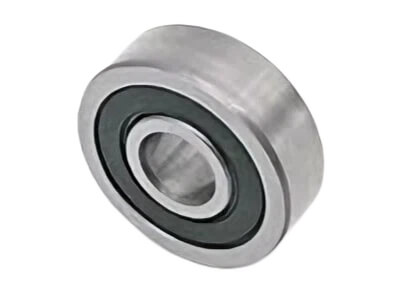
The equipment mainly uses deep groove ball bearings, including:
| Bearing Model | Typical Application |
| 6202-2RS | Conveyor rollers |
| 6203-2RS | Drive rollers |
| 6204-2RS | Support rollers |
| 6205-2RS | Drive shafts |
All four models fall within the 62 series deep groove ball bearing, a range widely used in conveyor rollers, drive shafts, and other continuous-duty rotating applications.
Many conveyor lines run 12 to 24 hours a day. Because production schedules are often continuous, maintenance windows are limited, and customers expect bearings to run reliably between scheduled maintenance intervals rather than requiring unplanned attention.
The Challenge
Catastrophic bearing failures were uncommon, but maintenance teams noticed a steady rise in routine bearing replacements. The most common complaints included:
● Conveyor rollers becoming noisy
● Bearings feeling rough during inspection
● Increased roller resistance
● Higher maintenance frequency
● Unexpected production interruptions caused by seized rollers
The failed bearings were not concentrated in one specific location, they appeared throughout the conveyor system. That pattern pointed toward operating conditions rather than a design defect.
Understanding Conveyor Operating Conditions
Conveyor bearings may appear to run under relatively light loads, but their working environment presents its own set of challenges. Unlike electric motors that rotate continuously at a constant speed, conveyor rollers experience:
● Continuous operation for long periods
● Frequent starts and stops
● Variable product loads
● Dust accumulation
● Occasional impacts from heavy packages
● Temperature changes between production shifts
These conditions gradually affect lubrication performance and bearing wear. Even when loads stay well below a bearing's rated capacity, environmental factors alone can meaningfully shorten service life.
Investigation and Root Cause Analysis
The engineering team collected failed bearings from several customer sites for inspection. After comparing maintenance records against the returned bearings, three recurring issues stood out.
① Contamination from Dust
Many conveyor systems operated in dusty production environments. Sealed bearings kept out most contaminants, but fine dust gradually built up around the seals over time. During teardown, several rollers showed damaged seals that had allowed contaminants to reach the bearing interior, where dust mixed with grease and accelerated internal wear.
② Bearing Selection Based Only on Size
Some replacement bearings purchased by maintenance teams met the correct dimensions but differed in sealing quality and manufacturing consistency. Because every bearing carried the same model number on the box, purchasing decisions were often made on price alone, even though differences in seal performance, grease quality, and manufacturing precision led to noticeably different service life in practice.
This is a common blind spot in bearing procurement; we cover it in more detail in Total Cost of Ownership (TCO): Why Cheap Bearings Cost More in the Long Run.
③ Lubrication Breakdown
Inspection also showed that grease inside several bearings had started losing its lubricating properties after extended service. Continuous operation gradually raised bearing temperature, which accelerated grease aging; once lubrication performance declined, friction increased and wear followed.
The Solution
Rather than changing the conveyor design, the manufacturer focused on tightening bearing specifications and maintenance procedures.
① Upgrading to High-Quality 2RS Sealed Bearings
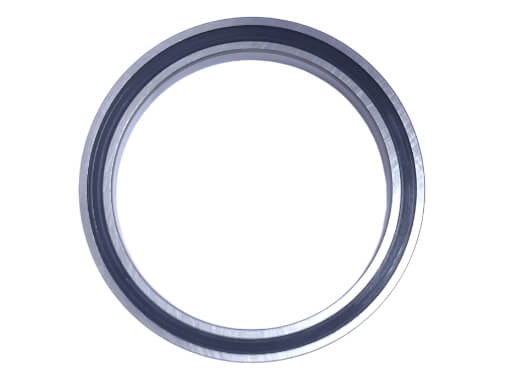
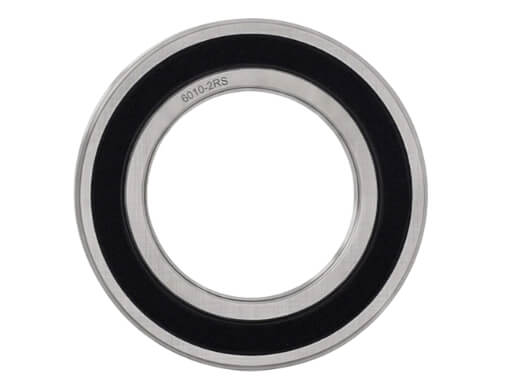
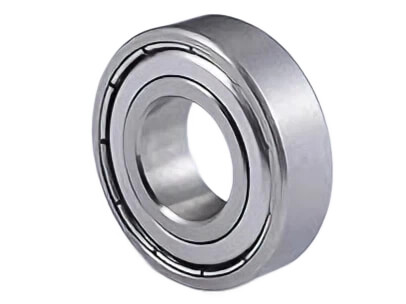
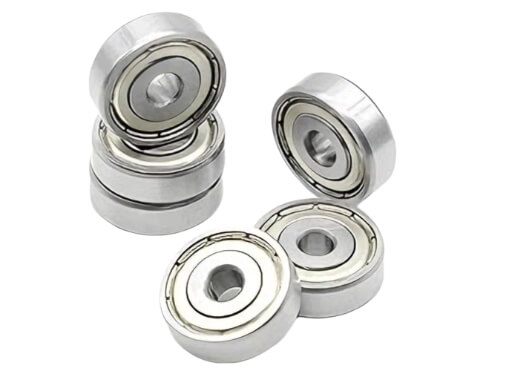
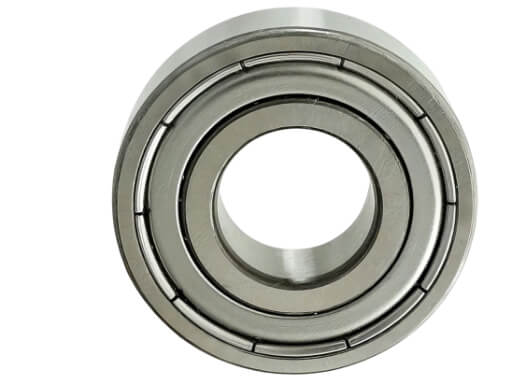
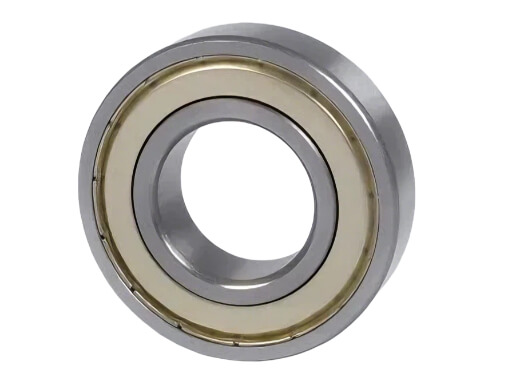
The original equipment already used sealed bearings, but the team paid closer attention to seal quality on replacements. For dusty environments, 2RS rubber seals provide better contact protection against contaminants than ZZ metal shields, which leave a small labyrinth gap rather than a sealing lip. No bearing is completely maintenance-free, but improved sealing measurably reduced the amount of dust reaching the rolling elements.
② Selecting Bearings Designed for Continuous Operation
Instead of purchasing bearings based solely on dimensions, the manufacturer introduced additional selection criteria. Bearings were evaluated according to:
● Seal performance
● Grease consistency
● Noise characteristics
● Manufacturing quality
● Rotational smoothness
This gave the manufacturer a repeatable checklist rather than a price comparison, which is the same standard we recommend in OEM vs Aftermarket Bearings: What's the Real Difference? and it ensured far greater consistency across production batches.
③ Reviewing Lubrication Requirements
The engineering team also reviewed grease specifications. Conveyor systems running continuously generate more heat than equipment used intermittently, so grease with strong oxidation stability and a suitable operating temperature range (typically a lithium-complex grease rated for roughly -20°C to 120°C in this type of application) was better suited to maintaining lubrication performance over longer service intervals.
④ Standardizing Replacement Bearings
Previously, maintenance teams sometimes installed bearings from different suppliers depending on local availability. To improve consistency, the manufacturer set a standardized replacement specification for its commonly used bearing models, one supplier, one sealing type, one grease specification per model, which simplified inventory management and reduced variation in maintenance outcomes.
Testing and Field Evaluation
Before rolling out the revised bearing specification across all product lines, several conveyor systems were monitored under normal operating conditions over a period of [insert evaluation duration, e.g., 3 months]. Engineers tracked:
● Bearing temperature
● Operating noise
● Roller rotation resistance
● Seal condition
● Maintenance frequency
Routine inspections throughout the evaluation period allowed the team to compare bearing condition directly against previous installations.
Results
Following implementation of the revised bearing specification, the manufacturer reported the following improvements:
① Reduced Maintenance Frequency
Maintenance teams reported meaningfully fewer bearing replacements during scheduled service intervals.
② Smoother Roller Operation
Rollers maintained smoother rotation after extended operating periods, reducing additional load on the drive system.
③ Improved Protection Against Dust
The upgraded sealing configuration reduced contamination inside the bearings, particularly in dusty production environments.
④ Lower Maintenance Costs
Because bearings stayed in service longer under normal operating conditions, customers spent less time replacing conveyor rollers and experienced fewer unplanned maintenance interruptions. Maintenance costs still depend on operating conditions and maintenance practices, but improved bearing selection was the single largest contributor to a more reliable conveyor system in this case.
Lessons Learned
This project is a reminder that lowering maintenance costs isn't always about buying cheaper components. In many industrial applications, selecting bearings by model number or purchase price alone can actually lead to higher long-term maintenance expenses.
When choosing bearings for conveyor systems, engineers should also weigh:
● Operating environment
● Seal type
● Lubrication performance
● Manufacturing consistency
● Duty cycle
● Maintenance intervals
A slightly higher-quality bearing often delivers a lower total cost of ownership by reducing downtime and replacement frequency — even if its unit price is a little higher.
Conclusion
By reviewing bearing specifications instead of redesigning the conveyor system, the manufacturer reduced maintenance requirements and improved equipment reliability without touching the mechanical design. Bearing performance depends on more than dimensions alone — sealing, lubrication, and manufacturing consistency all shape service life just as much as the model number does.
For conveyor equipment operating continuously in demanding industrial environments, selecting the right bearing specification is a practical, low-cost way to reduce maintenance costs and improve overall productivity.
Frequently Asked Questions
① What type of bearings are best for conveyor systems?
Sealed deep groove ball bearings, such as 2RS types in the 62 or 63 series, are generally preferred for conveyor rollers and drive shafts because they combine adequate load capacity with strong protection against dust and moisture.
② Why do conveyor bearings fail prematurely?
The most common causes are seal damage that lets in dust or moisture, grease breakdown from sustained heat and continuous operation, and inconsistent bearing quality when replacements are purchased on price alone rather than sealing and manufacturing consistency.
③ Are 2RS sealed bearings better than ZZ shielded bearings for dusty environments?
Generally yes. 2RS rubber seals maintain contact with the inner ring and block contaminants more effectively, while ZZ metal shields leave a small gap that allows fine dust to pass through over time. ZZ bearings are better suited to cleaner, lower-friction applications.
④ How often should conveyor bearings be replaced?
There is no universal interval — it depends on duty cycle, contamination levels, and load. Instead of a fixed schedule, most manufacturers track noise, temperature, and rotation resistance during routine inspections and replace bearings based on condition rather than a calendar date alone.
About Welink Bearing
Welink Bearing manufactures deep groove ball bearings for conveyor systems, electric motors, pumps, ventilation equipment, food processing machinery, agricultural machinery, and other industrial applications. Our engineering team helps customers select suitable bearing solutions based on operating conditions, load requirements, lubrication, vibration performance, and environmental factors.
Whether you are designing new conveyor equipment or improving an existing production line, we are ready to support your bearing selection process.
Contact Welink Bearing
Welink Bearing Technology Co., Ltd.
Address: No. 189, Xiahe Road, Siming District, Xiamen, China
Mobile / WeChat / WhatsApp: +86 18030202929
Email: sales1@welinkbearing.com
Website: https://www.welinkbearing.com
Leave A Message
Scan to Wechat/Whatsapp :