
Optimizing Reliability: How a Ventilation Fan Manufacturer Extended Motor Bearing Service Life
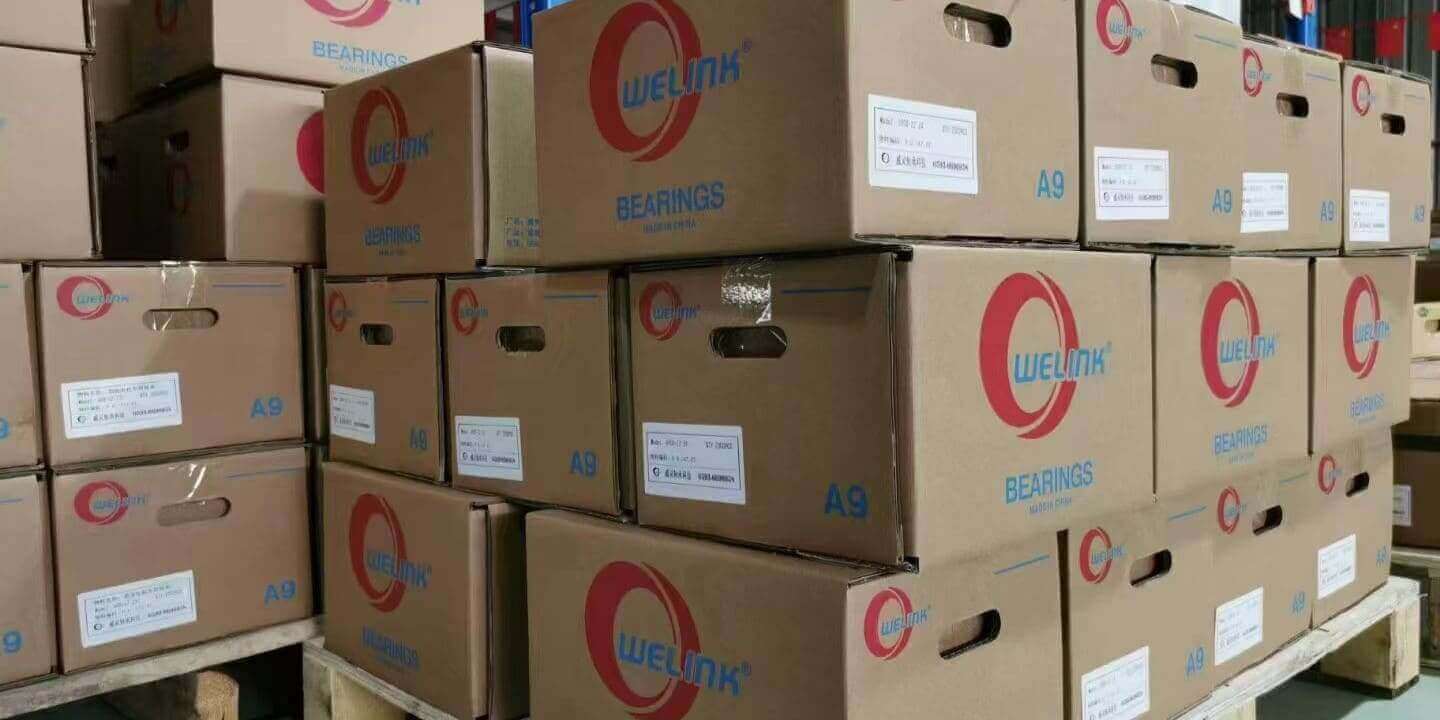
Industrial and commercial ventilation fans are engineered for endurance, expected to operate continuously for thousands of hours while maintaining whispers-quiet acoustics and stable airflow. Whether deployed in heavy-duty manufacturing facilities, agricultural greenhouses, or high-traffic commercial buildings, a fan’s reliability hinges entirely on its internal components.
Recently, a prominent ventilation fan manufacturer partnered with Welink Bearing to resolve a critical operational bottleneck: inconsistent bearing service life across several of their flagship fan motor models. Although the motors perfectly met standard laboratory design requirements, real-world applications revealed a pattern of premature noise, elevated operating temperatures, and micro-vibrations after extended field operation. The manufacturer sought to identify the root causes of this degradation and implement a permanent, long-term reliability upgrade.
Customer Profile & Application Context
The customer is a leading manufacturer specializing in high-efficiency ventilation and exhaust fan systems designed for harsh, continuous-duty environments. Their product portfolio serves diverse sectors globally, including:
☛ Industrial warehouses and automated manufacturing plants
☛ Agricultural facilities, poultry farms, and commercial greenhouses
☛ Large-scale commercial HVAC and ventilation systems
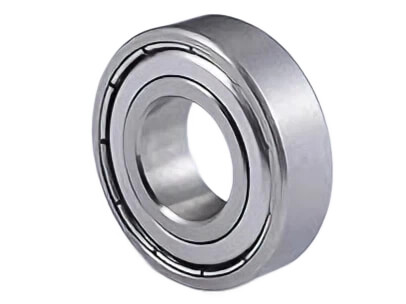
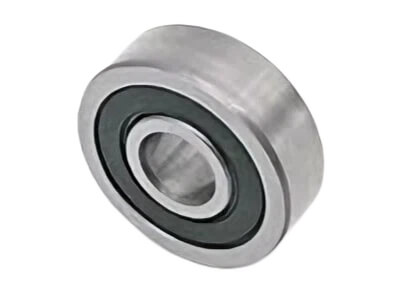
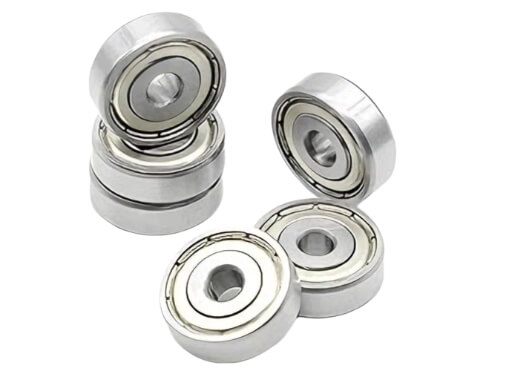
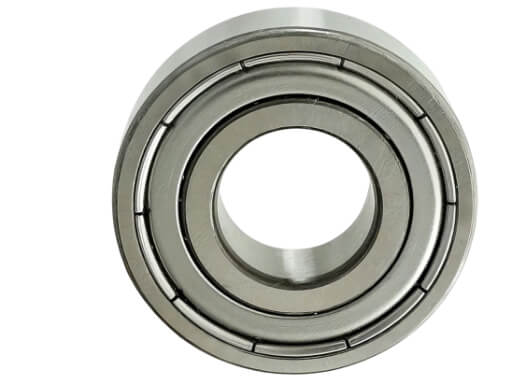
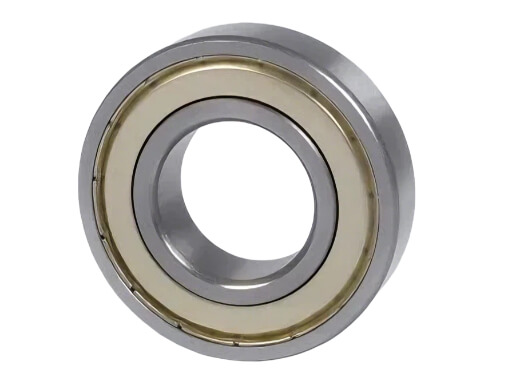
The primary motors in question utilized standard deep groove ball bearings, specifically models 6201ZZ, 6202ZZ, 6203ZZ, and 6204ZZ. During peak seasons, these fans frequently operate under continuous 24/7 cycles, pushing the thermal and mechanical boundaries of standard-specification bearings.
The Challenge: Premature Wear and Thermal Stress
During field deployment, the manufacturer noticed that a percentage of fan motors experienced performance drops well before their calculated service life. The technical teams flagged several recurring symptoms:
☛ A progressive increase in high-frequency operating noise.
☛ Elevated micro-vibration levels that threatened motor structural integrity.
☛ Spikes in motor housing temperatures.
☛ A noticeable loss of bearing smoothness during manual inspection after long-term runs.
While catastrophic bearing seizures were rare, the early-onset noise and vibration led to an increase in warranty claims and customer dissatisfaction. The objective was clear: optimize the bearing configuration to extend service life and drastically reduce maintenance intervals.
Engineering Investigation & Root Cause Analysis
Welink Bearing’s application engineering team conducted a comprehensive forensic analysis on the worn bearings returned from the field. By evaluating the raceways, cage conditions, and residual grease, several critical operational patterns emerged:
① Underestimated Thermal Expansion: While ambient temperatures were moderate, the heat generated by continuous motor operation was higher than anticipated.
② Radial Clearance Reduction: The original motors were fitted with standard (CN) internal clearance bearings. As frictitional and electrical heat caused the shaft and the bearing's inner ring to expand, the effective internal working clearance dropped to near zero, creating a tight, high-friction state.
③ Accelerated Lubricant Degradation: The combination of reduced clearance and sustained high temperatures placed immense thermal stress on the factory grease. Over time, the lubricant suffered accelerated oxidation, losing its viscosity and failing to form a protective hydrodynamic film.
The Solution: Tailored Bearing Optimization
Collaborating closely with the manufacturer's R&D team, Welink Bearing implemented a multi-tiered optimization strategy to mitigate thermal stress without altering the existing motor housing or shaft dimensions.
① Transitioning to C3 Internal Clearance
Welink recommended replacing the standard CN clearance bearings with C3 internal clearance bearings for the affected 6201ZZ through 6204ZZ models. The larger initial radial clearance was meticulously calculated to act as a buffer, safely compensating for the thermal expansion of the inner ring and shaft during peak operation. Once the motor reached its steady-state working temperature, the bearing settled into its optimal operating clearance.
② Premium High-Temperature, Continuous-Duty Grease
We upgraded the lubrication specification to a synthetic grease uniquely formulated for electric motors. This lubricant features high thermal stability and excellent shear resistance, ensuring it maintains a robust oil film even during continuous 24/7 summer operations.
③ Rigorous Incoming Quality Control (IQC)
To prevent production variations, Welink helped the customer implement advanced incoming inspection protocols, focusing tightly on:
➝ Precision testing of radial internal clearance.
➝ Acoustic and vibration validation via specialized BVT (Bearing Vibration Testers).
➝ Strict visual and packaging integrity audits to prevent contamination before assembly.
Rigorous Testing and Validation
Performance Metrics Summary
| Operational Parameter | Original Configuration (Standard CN) | Optimized Configuration (Welink C3) |
| Operating Temperature | High fluctuations; prone to thermal spikes | Highly stable and consistent profile |
| Acoustic Output (Noise) | Gradual DB increase over time | Consistently low; minimal growth |
| Lubrication Longevity | Rapid grease thinning and oxidation | Excellent grease retention and stability |
| Field Maintenance Needs | Frequent warranty claims | Significant drop in service interventions |
Key Technical Takeaways
This case study highlights a critical reality in electric motor design: bearing specifications must match the duty cycle, not just the dimensions. While standard dimensions (like a 6202) fit the shaft, factors such as internal radial clearance (CN vs. C3), grease type, and thermal expansion coefficients dictate long-term survivability. A bearing optimized for intermittent use will almost always fail prematurely in a continuous-duty ventilation environment.
Conclusion
By conducting a thorough root-cause analysis and making precise adjustments to the bearing's internal clearance and lubrication, the ventilation fan manufacturer successfully extended product service life and safeguarded their brand reputation, all without the prohibitive costs of a complete motor redesign.
For ventilation systems expected to deliver uninterrupted performance, the internal bearing configuration should never be an afterthought; it is a core pillar of reliable motor engineering.
About Welink Bearing
Welink Bearing is a premier manufacturer of high-precision deep groove ball bearings tailored for ventilation fans, electric motors, industrial pumps, agricultural machinery, and household appliances. We don’t just supply bearings—we provide engineering partnerships. Our team helps global clients analyze operating temperatures, load factors, and environmental constraints to select the ideal bearing configuration for maximum service life.
Contact Welink Bearing
Email: sales1@welinkbearing.com
Made-in-China Showroom: https://welinkbearing.en.made-in-china.com/
Leave A Message
Scan to Wechat/Whatsapp :