In bearing procurement, confusion between 61908 and 6908 is extremely common. A customer sends a replacement request for 6908. The supplier quotes 61908. The maintenance team checks both numbers and wonders: are these different bearings? Will they fit?
We deal with this question almost weekly at Welink. So here's a straight answer based on years of supplying these bearings to industries ranging from medical equipment to industrial automation.
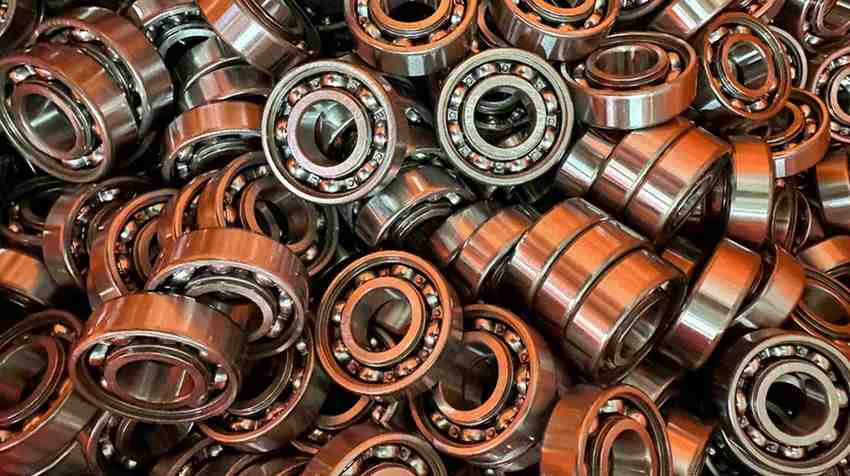
61908 and 6908 Are the Same Bearing
The 61908 bearing and the 6908 bearing are identical in every physical aspect. Same dimensions. Same load ratings. Same applications.
The only difference? Naming convention.
● 61908 follows the current ISO dimension series. This is the standard used by all major manufacturers today, SKF, NSK, FAG, and Welink.
● 6908 is the old designation. You'll still find it on legacy equipment drawings, older inventory systems, and in some Asian markets. Some old catalogs also list it as 1000908.
Think of it like updating a part number in an engineering system. The component itself doesn't change. Just the label.
Technical Specifications (Identical for Both)
Because they're the same bearing, the specs don't change. Here are the standard dimensions for a 61908/6908 deep groove ball bearing.
| Specification |
Value |
| Bore Diameter (d) |
40 mm |
| Outside Diameter (D) |
62 mm |
| Width (B) |
12 mm |
| Dynamic Load Rating (Cr) |
13.7 – 15.2 kN (manufacturer-dependent) |
| Static Load Rating (C0r) |
9.9 – 10.0 kN |
| Limiting Speed (Grease) |
~10,000 – 11,000 rpm |
| Weight |
~0.112 – 0.115 kg |
Note: Load ratings vary slightly between manufacturers based on material choices and internal design optimizations. But the mounting dimensions, 40mm bore, 62mm OD, 12mm width, are fixed by ISO standards.
Real-World Context: Why Two Numbers Still Exist
If they're the same, why do both numbers keep appearing?
In our experience working with customers across different industries:
● Older machinery (especially from the 1980s-90s) often has "6908" printed on original part lists.
● Newer designs and global suppliers standardized to "61908" around the 2000s.
● Some regions still use the old system internally, even when sourcing new bearings.
We regularly help customers translate between the two. A recent example: a client maintaining 20-year-old textile equipment sent us a drawing marked "6908-2RS." We supplied our 61908-2RS. Exact fit. No issues.
The Suffixes Matter More Than the Base Number
The real technical distinction isn't between 61908 and 6908. It's in the suffix.
| Suffix |
Meaning |
Typical Application |
| 2RS |
Two rubber contact seals |
Electric motors, washing machines, power tools, anywhere contamination protection is needed |
| ZZ |
Two metal shields |
Electric motors, washing machines, power tools, anywhere contamination protection is needed |
| C3 |
Larger internal clearance |
Automotive alternators, gearboxes, fans, good debris protection, lower friction than seals |
| Open |
No shields or seals |
High-speed spindles, large motors, applications with significant temperature rise |
So a 61908-2RS and a 6908-2RS are identical. A 61908-2RS and a 61908-ZZ are physically the same size but different in sealing.
How to Order Correctly
If you're sourcing bearings and want to avoid confusion:
① Always specify the 40×62×12 dimensions in your inquiry. This overrides any naming ambiguity.
② Use the full designation including suffix. For example, "61908-2RS" or "6908-2RS" tells the supplier exactly what you need.
③ If you're designing new equipment, use 61908 as the base number. It's the current global standard and will make future replacements simpler.
Common Questions Customers Ask
① Is a 6908 bearing the same as a 61908?
Yes. They share identical dimensions: 40mm bore, 62mm OD, 12mm width.
② Can I replace a 6908 with a 61908?
Absolutely. They are interchangeable. Just match the suffix (2RS, ZZ, etc.) to your application.
③ Why do some suppliers list both numbers?
To help customers who search using either the old or new designation. It's a service to avoid lost sales due to naming differences.
④ Is the 61908 considered a thin-section bearing?
Yes. The 61900 series is part of ISO dimension series 19, which features a relatively thin cross-section for the bore size. For comparison, a 6808 (40×52×7) is even thinner, while a 6308 (40×90×23) is much heavier.
⑤ What tolerance classes are available?
Standard deep groove ball bearings like the 61908 are typically available in P0 (normal) and P6 (higher precision) . For most industrial applications, P0 is sufficient. High-speed spindles may require P5 or higher, which we can supply on request.
Technical Specifications Summary
For engineers who need the numbers:
| Parameter |
61908 / 6908 |
| Bore (d) |
40 mm |
| Outside Diameter (D) |
62 mm |
| Width (B) |
12 mm |
| Chamfer (r min) |
0.6 mm |
| Dynamic Load (Cr) |
~14,000 N (typical) |
| Static Load (C0r) |
~10,000 N |
| Fatigue Load Limit |
~420 N |
| Reference Speed (grease) |
11,000 rpm |
| Mass |
0.112 kg |
(Data based on Welink standard product. Other brands may vary slightly.)
Need Technical Support?
Selecting the right bearing isn't just about numbers. It's about fit, seal type, internal clearance, and application conditions.
If you're unsure whether a 61908-2RS suits your motor repair, or need C3 clearance for a high-temperature environment, our engineering team can help. We supply bearings for medical devices, automotive components, industrial gearboxes, and more, with full OEM customization available.
For specifications or to discuss your application, contact our engineering team directly.