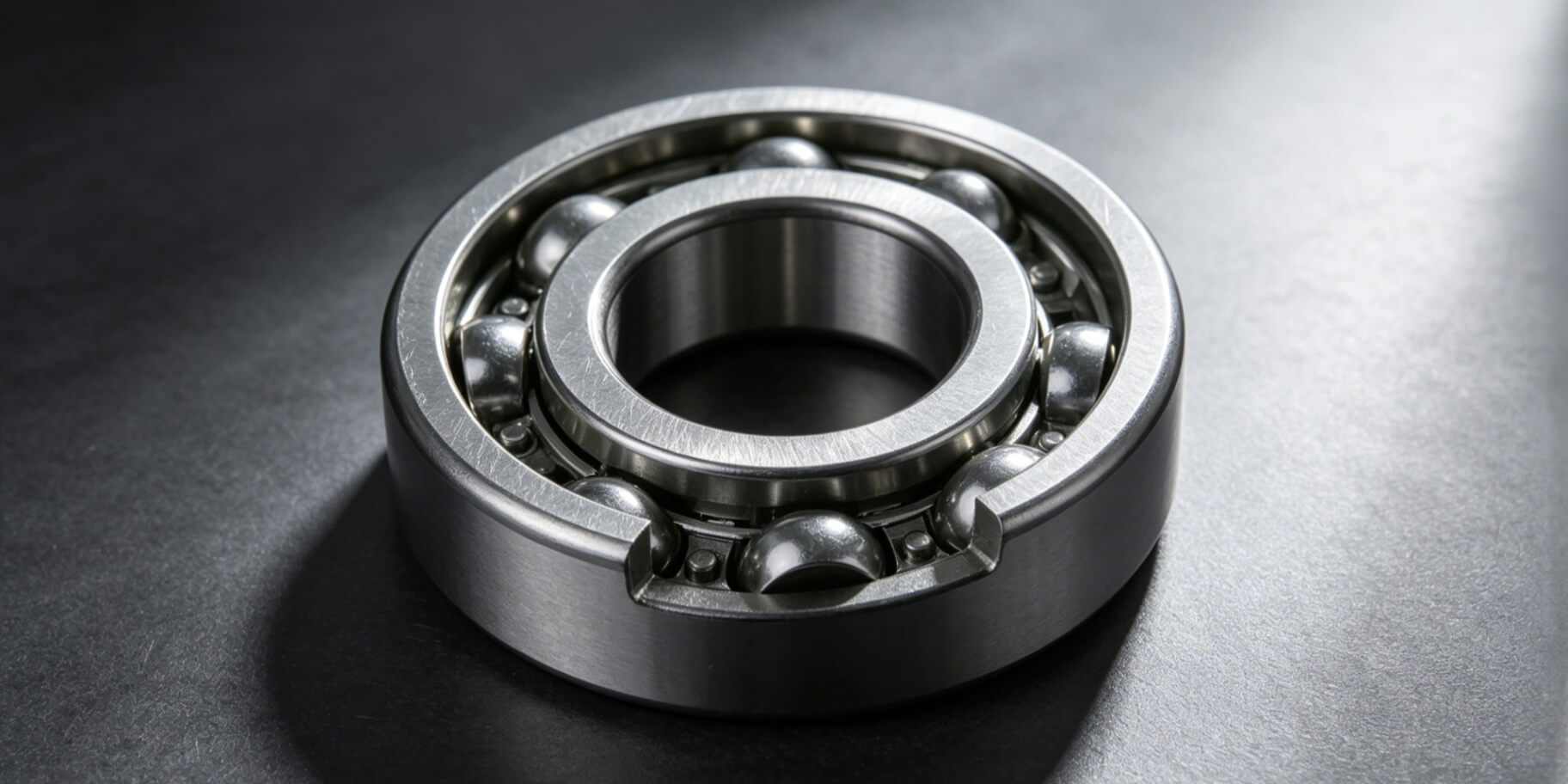
When engineers design rotating equipment, deep groove ball bearings are often the go-to choice due to their versatility and high-speed capabilities. However, a critical question frequently arises during Deep Groove Bearing Installation: Do these bearings actually need to be preloaded? With over 15 years of manufacturing and engineering expertise, the technical team at Welink Bearing frequently addresses this exact pain point for our global clients. In this comprehensive Bearing Preload Guide, we will explore when preload is necessary, how to correctly apply it, and the profound impact it has on the overall lifespan of your application.
The short answer is: Usually no, but in specific high-precision or high-speed applications, yes.
By design, deep groove ball bearings are manufactured with a specific internal clearance (such as C3 or C4) to accommodate thermal expansion and ensure smooth rolling under standard radial loads. For general industrial applications, this standard clearance is sufficient.
However, deep groove ball bearings are also highly effective as Axial Load Ball Bearings. When subjected to specific engineering environments, applying an axial preload becomes crucial. You should consider preloading your bearings if your application involves:
• Precision Instruments & Machine Tools: Preload eliminates internal radial and axial clearance, significantly increasing the rigidity of the shaft and ensuring precise rotational accuracy.
• High-Speed Electric Motors: At very high RPMs, the balls inside the bearing can begin to slide (skid) rather than roll along the raceway, causing premature wear. A light axial preload ensures constant traction between the balls and the raceway.
• Noise Reduction: By removing internal play, preload minimizes vibration and operational noise, a critical requirement for HVAC systems and precision medical devices.
How to Apply Preload to Deep Groove Ball Bearings
If your engineering application requires preload, achieving the correct force is vital. There are two primary methods used during Deep Groove Bearing Installation:
① Constant Pressure Preload (Spring Method)
This is the most common and highly recommended method for deep groove ball bearings, especially in electric motors. It is typically achieved using wave spring washers or Belleville washers.
• How it works: A spring is inserted into the housing adjacent to the bearing's outer ring. The spring applies a constant axial force, pushing the outer ring slightly and forcing the balls into contact with the raceways.
• Advantage: Spring preload is forgiving. It automatically compensates for thermal expansion during operation, maintaining a consistent preload force even as temperature fluctuations alter the shaft length.
② Position Preload (Solid Method)
This method involves using precision-machined spacers, shims, or locknuts to lock the bearings into a specific position, forcing the internal components together.
• How it works: By tightening a locknut or selecting a spacer of an exact thickness, the internal clearance is forcibly removed.
• Advantage: This provides maximum system rigidity. However, it is highly sensitive to thermal expansion and requires meticulous machining accuracy.
The Impact of Preload on Bearing Life
Understanding the relationship between preload and bearing fatigue life is the most critical aspect of this Bearing Preload Guide.
More is not always better. The relationship follows a specific curve:
• Optimal Preload: A very light to moderate preload actually increases bearing life. By removing clearance, the load is distributed evenly across more rolling elements, preventing localized stress on just one or two balls.
• Excessive Preload (The Danger Zone): If the preload force is too high, the contact stress between the steel balls and the raceways spikes exponentially. This generates excessive internal friction and heat. High heat degrades the lubrication, leading to metal-to-metal contact, spalling, and a catastrophic reduction in bearing life.
Engineers must calculate the exact preload force required, often measured in Newtons based on the dynamic load ratings and operational speeds.
Trust the Manufacturing Experts
Determining the right preload strategy requires a deep understanding of bearing mechanics. As an integrated manufacturer and trader, Welink Bearing controls every step of the production process. Whether you are sourcing our reliable 6000, 6200, or heavy-duty 6300 series deep groove ball bearings, our technical team is ready to assist you with load calculations, clearance selection, and installation best practices.
Are you struggling with bearing noise or premature failure in your equipment? Contact Welink Bearing today, and let our engineering team help you optimize your bearing performance.