When you are designing a new piece of equipment or replacing a worn-out component, one of the most critical decisions you will make is selecting the right bearing material. Get it right, and your machine runs smoothly for years. Get it wrong, and you might face premature failure, costly downtime, and frustrated customers.
For most industrial applications, the choice usually comes down to two main contenders: Chrome Steel (GCr15) and Stainless Steel.
As a manufacturer of deep groove ball bearings, we at Welink Bearing often hear customers ask: "Which one is actually better?" The truth is, neither is universally "better", it completely depends on your working environment.
Let's break down the real-world differences in corrosion resistance, hardness, and cost so you can make the right choice for your application.
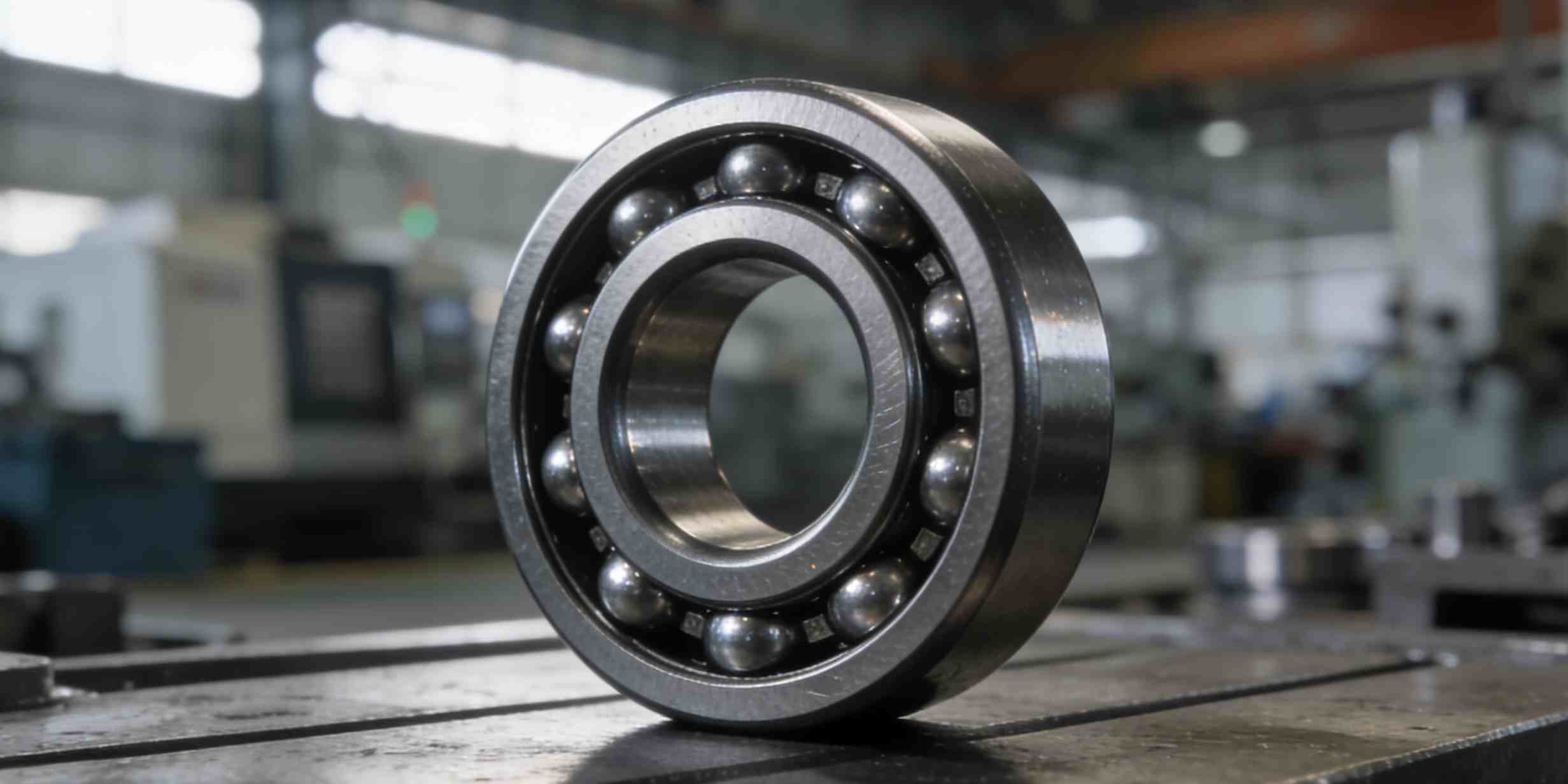
➊ Chrome Steel (GCr15): The Industry Workhorse
Chrome steel, widely known by its material grade GCr15 (equivalent to AISI 52100 or 100Cr6), is the undisputed standard for the bearing industry. If you buy a standard deep groove ball bearing off the shelf, it is almost certainly made of chrome steel.
The Advantages:
• Exceptional Hardness: GCr15 undergoes precision heat treatment, achieving a high hardness level (typically 60-64 HRC). This makes it incredibly durable against wear and tear.
• High Load Capacity: Because of its hardness and high fatigue strength, chrome steel can handle heavy radial and axial loads effortlessly.
• Cost-Effective: It is significantly cheaper to produce and process than stainless steel, making it the most economical choice for large-scale manufacturing.
The Drawback:
• Poor Corrosion Resistance: Chrome steel is not strictly "chrome" in the way a shiny car bumper is. It contains a small amount of chromium for hardenability, not for rust prevention. If exposed to water, harsh chemicals, or high humidity without adequate lubrication, GCr15 will rust quickly.
Best For: Electric motors, gearboxes, indoor conveying systems, power tools, and any sealed environment where moisture is not a primary concern.
➋ Stainless Steel: The Corrosion Fighter
When the operating environment gets tough, stainless steel steps up. In the bearing industry, martensitic stainless steel (like AISI 440C) is the most common choice because it can be hardened, unlike the austenitic stainless steel (like 304 or 316) used in your kitchen sink.
The Advantages:
• Excellent Corrosion Resistance: With a much higher chromium content, stainless steel forms a passive oxide layer that protects it from rust. It can survive washdowns, high humidity, and exposure to certain mild chemicals.
• Wide Temperature Range: Stainless steel generally performs better in extreme temperatures (both high heat and freezing conditions) compared to standard chrome steel.
The Drawbacks:
• Lower Hardness and Load Capacity: 440C stainless steel tops out around 58-60 HRC. Because it is slightly softer than GCr15, its dynamic load rating is typically about 20% lower. You cannot push a stainless steel bearing quite as hard as a chrome steel one.
• Higher Cost: The raw material is more expensive, and it is harder to machine, meaning stainless steel bearings come at a premium price.
Best For: Food and beverage processing, medical devices, marine applications, packaging machinery, and cleanroom environments.
Head-to-Head Comparison Table
Quick Tip: Use this table to quickly match the material to your project requirements.
| Feature |
Chrome Steel (GCr15) |
Stainless Steel (440C) |
| Corrosion Resistance |
Low (Requires oil/grease protection) |
High (Resists water and mild chemicals) |
| Hardness (HRC) |
60 - 64 (Excellent) |
58 - 60 (Good) |
| Load Capacity |
100% (Baseline standard) |
Approx. 80% of Chrome Steel |
| Cost |
Low ($) |
High ($$$) |
| Magnetic? |
Yes |
Yes (Martensitic stainless is magnetic) |
How to Make Your Final Decision
If you are still on the fence, ask yourself these three simple questions:
➊ Will the bearing be exposed to water, steam, or corrosive chemicals?
If yes, you must choose Stainless Steel. No amount of grease can permanently protect chrome steel in a washdown environment.
➋ Is the bearing subjected to extremely heavy loads or high-impact shocks?
If yes, stick with Chrome Steel (GCr15) to prevent premature wear, provided the environment is dry.
➌ Are you on a strict budget for mass production?
If cost is the primary driver and the operating environment allows it, Chrome Steel will give you the best return on investment.
At Welink Bearing, we manufacture both high-precision GCr15 chrome steel and corrosion-resistant stainless steel deep groove ball bearings. If you are unsure which specification your current project requires, our engineering team is ready to help you analyze your application and find the most cost-effective solution.
[Contact Welink Bearing Experts Today]
Frequently Asked Questions (FAQs)
Does GCr15 chrome steel rust?
Yes. GCr15 has very low corrosion resistance. Unless it is heavily protected by a constant layer of oil or grease and kept in a dry environment, it will oxidize and rust.
Can I replace a chrome steel bearing with a stainless steel one?
Usually, yes. They share the same boundary dimensions (inner diameter, outer diameter, and width). However, you must account for the 20% drop in load capacity. Ensure your equipment's operating loads do not exceed the limits of the stainless steel bearing.
Is stainless steel bearing non-magnetic?
Not always. The 440C stainless steel used for bearings is martensitic, meaning it is strongly magnetic. If you need completely non-magnetic bearings, you would need to look into ceramic bearings or special 316 stainless steel (which cannot handle high loads).