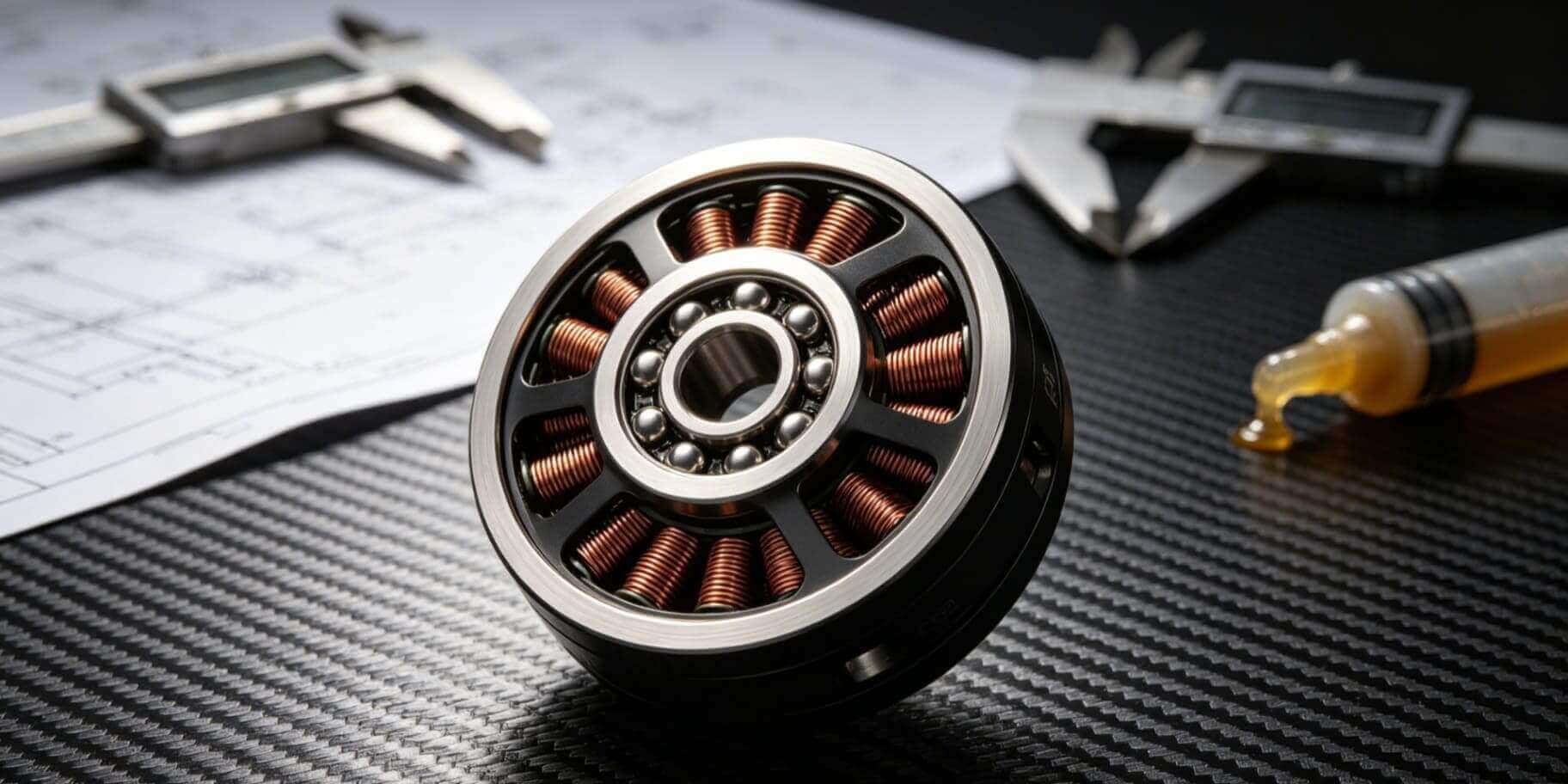
Quick Answer (TL;DR): The best bearings for drone (UAV) motors are high-precision miniature deep groove ball bearings (such as the MR series, 6800, and 6900 series) that strike a precise balance between ultra-high speeds, lightweight design, and environmental protection. For optimal UAV performance, engineers should specify ABEC-5 (P5) or higher precision, utilize hybrid ceramic or stainless steel materials for weight reduction and corrosion resistance, and select non-contact seals (2RZ) to block dust and moisture without sacrificing RPM.
The rapidly expanding drone industry spanning from nimble FPV racing drones to heavy-duty agricultural and delivery UAVs, has placed unprecedented demands on electric motors. At the heart of these high-performance brushless motors lies a critical, yet often overlooked component: the bearing.
If a bearing fails, the motor fails, and the drone falls. Choosing the right deep groove ball bearing requires a delicate balancing act. Here is the ultimate technical guide on how to balance weight, speed, and durability when selecting bearings for drone applications.
① High Speed: Managing Extreme RPMs and Heat
Brushless motors for drones routinely operate at speeds ranging from 10,000 to over 30,000 RPM. At these extreme velocities, standard bearings generate excessive friction, leading to heat buildup, grease degradation, and eventual seizure.
To ensure high-speed stability, consider the following factors:
• Precision Grades (Tolerance): Always opt for ABEC-5 (P5) or ABEC-7 (P4) precision grades. Tighter manufacturing tolerances reduce internal vibration and ensure smoother rotation at peak RPMs.
• Internal Clearance: A standard CN clearance might be too tight when the motor heats up during aggressive flying. Opting for a slightly larger C3 clearance allows for thermal expansion, preventing the bearing from binding under high operating temperatures.
• Lubrication Strategy: Heavy greases will cause "drag" and drain the drone's battery. High-speed drone bearings should be pre-lubricated with a low-viscosity, temperature-resistant synthetic oil or a 25%-30% fill of premium lightweight grease.
② Lightweight Design: Maximizing Payload and Flight Time
In UAV design, every single gram matters. The heavier the motor components, the shorter the battery life and the lower the payload capacity.
• Miniature and Thin-Section Bearings: Instead of standard sizes, drone motors primarily utilize miniature deep groove ball bearings (like the MR series) or thin-section bearings (like the 6700, 6800, and 6900 series). These designs drastically reduce the cross-sectional area and weight while still providing excellent radial support.
• The Hybrid Ceramic Upgrade: For premium drone motors, replacing traditional steel balls with Silicon Nitride ceramic balls creates a hybrid ceramic bearing. Ceramic balls are 40% lighter than steel, significantly reducing centrifugal force and internal friction at high speeds, while also acting as an electrical insulator.
③ Durability & Protection: Surviving Harsh Environments
Drones do not fly in cleanrooms. They are constantly exposed to dust, dirt, moisture, and impact. How you protect the internal raceways dictates the lifespan of the motor.
The Shielding Dilemma: ZZ vs. 2RS vs. 2RZ
Choosing the right closure is the most critical decision for durability versus speed:
• Metal Shields (ZZ): Offers low friction and supports the highest speeds. However, there is a micro-gap between the shield and the inner ring, making it vulnerable to fine dust and moisture. Best for: FPV racing drones, indoor UAVs, and clean environments.
• Contact Rubber Seals (2RS): Provides excellent protection against heavy dust, water splashes, and agricultural chemicals. The trade-off is that the rubber lip physically touches the inner ring, creating friction, lowering maximum speed, and reducing battery efficiency. Best for: Agricultural drones, marine drones, and heavy-duty delivery UAVs.
• Non-Contact Rubber Seals (2RZ/VV): The golden middle ground. The rubber seal sits extremely close to the inner ring without actually touching it. It offers significantly better dust/water resistance than metal shields while maintaining the low-friction, high-speed capabilities needed for most drones. Best for: Professional aerial photography drones and commercial UAVs.
Technical Comparison: Bearing Materials for UAVs
To help your engineering team make the right choice, here is a quick comparison of standard bearing materials used in the UAV industry:
| Material Type |
Pros for UAV Motors |
Cons for UAV Motors |
Best Application |
| Chrome Steel (GCr15) |
High load capacity, highly durable, cost-effective. |
Susceptible to rust if exposed to high moisture. |
Standard consumer drones, indoor applications. |
| Stainless Steel (440C) |
Excellent corrosion and rust resistance, great for damp conditions. |
Slightly lower load capacity and speed limit than Chrome Steel. |
Agricultural drones, marine/waterproof drones. |
| Hybrid Ceramic |
Ultra-lightweight, extremely high RPM capabilities, low heat generation. |
Higher manufacturing cost. |
High-end FPV racing, professional cinematic drones. |
Why Choose Welink Bearing for Your Drone Motors?
As a manufacturer specializing in deep groove ball bearings and miniature bearings, Welink Bearing understands the rigorous demands of the global UAV supply chain. We don't just sell standard off-the-shelf parts; we engineer solutions.
When you partner with us, you gain access to:
• Customized Lubrication: Factory-filled with specialized low-friction aerospace greases tailored to your exact motor RPM.
• Strict Noise & Vibration Testing: Every miniature bearing undergoes rigorous ZV/V testing to ensure whisper-quiet operation, crucial for cinematic and stealth UAVs.
• Reliable OEM Production: From the popular MR52ZZ to custom 68/69 series with specialized 2RZ seals, our factory floor is equipped to scale with your production line.
Are you experiencing premature motor failure or excessive bearing noise in your current UAV design? Our engineering team is ready to analyze your application and recommend the perfect bearing configuration.